
Fixed Magnetic Separators: High-Intensity Process Solutions

Technical brochures
Applications

magnets

magnets

magnets

Video

Fixed Industrial Magnetic Separators: High-Intensity Process Solutions

.
BritSOLIDS provides precision-engineered magnetic separation systems designed to protect downstream machinery and guarantee product purity. Our solutions target the removal of ferrous and paramagnetic contaminants across food, pharmaceutical, chemical, and heavy industrial sectors in the UK.
.
Why Choose High-Intensity Magnetic Separation?

In modern processing, “tramp metal” isn’t the only risk. Work-hardened stainless steel fragments and sub-micron scale particles can bypass standard magnets. Our 12,000 Gauss Neodymium (Rare Earth) systems are specifically engineered to capture these high-risk contaminants, ensuring your facility remains HACCP and BRCGS compliant.

.
.
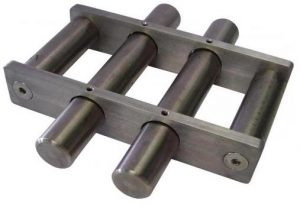
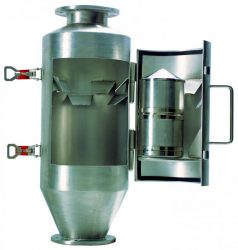
1. High-Intensity Grate Magnets (Magnetic Grids)

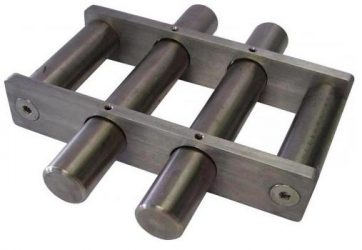
Magnetic Grates are the primary defense for gravity-fed systems. Designed for easy installation within hoppers, vertical chutes, and bins, these grids force material through a high-intensity magnetic field.

  • Configuration Options: Available in circular, square, rectangular, or bespoke shapes to fit any existing pipework.
  • Material Specification: Fully welded AISI 304 or 316L Stainless Steel with watertight seals.
  • Magnetic Performance: Choose from standard Ferrite for large tramp metal or High-Efficiency Neodymium (NdFeB) for fine particle extraction.
  • Maintenance: Low-profile design requires only periodic manual cleaning.
    Neodymium Magnetic Grate for hopper installation, 12,000 Gauss, AISI 304 Stainless Steel

    Neodymium Magnetic Grate

.
.
2. Rare Earth Magnetic Filter Bars (Rods)
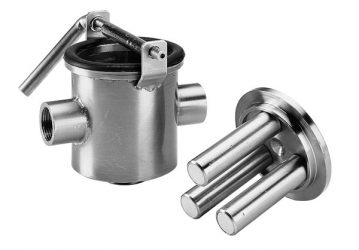
The Magnetic Bar is a core component of modern separation. These are versatile units used for the manual extraction of ferrous impurities from granular wood, plastic, food, or chemical powders.
  • Engineering Versatility: Supplied with tapped ends (M6, M8, M12) for seamless integration into custom housings.
  • Hygienic Finish: Polished to a high-grade finish to prevent bacterial growth, meeting stringent UK food industry standards.
  • Field Intensity: Standard 12,000 Gauss peak surface intensity ensures the capture of even weakly magnetic materials.
.
.
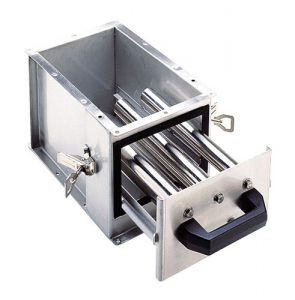
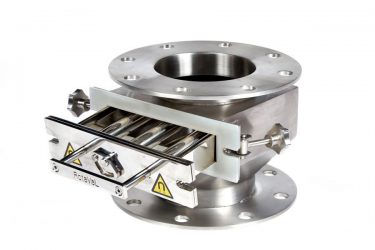
3. Drawer Filter Magnets (Magnetic Housing)

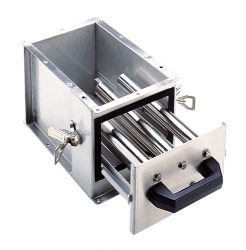
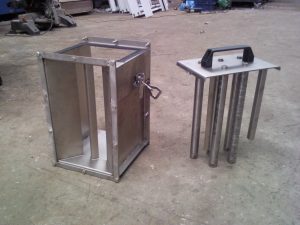
Our Drawer Magnetic Separators (or Drawer Filters) offer a robust, enclosed solution for high-volume gravity-fed lines. They are ideal for applications where product flow cannot be easily interrupted.

  • Performance: Features a 5-bar staggered configuration to ensure 100% product contact.
  • Quick-Clean Design: Features quick-release clamps for rapid access and a removable box design for efficient contaminant removal.
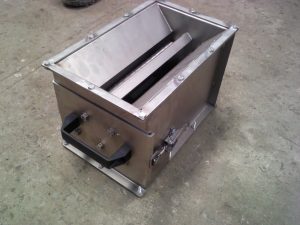
    Drawer Filter Magnet housing

    Drawer Filter Magnet housing

.
.
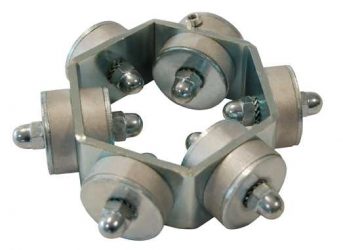
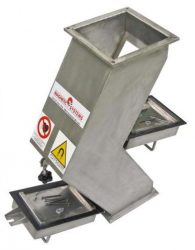
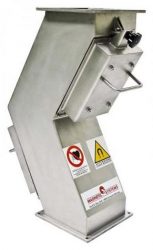
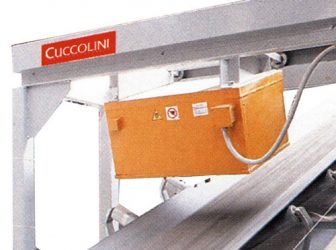
4. Magnetic Humps and Plate Magnets
For high-velocity or high-volume chutes, Plate Magnets and Magnetic Hump Traps provide heavy-duty protection against “tramp” metal like nuts and bolts.
.
.

Fixed Magnetic Separators – Technical Specification Comparison

.

Product Type Peak Surface Gauss Magnet Material Best Suited For Cleaning Method
Grate Magnets 10,000 – 12,000 Neodymium (NdFeB) Free-flowing powders & granules in hoppers. Manual Wipe
Magnetic Bars Up to 12,000+ Neodymium (NdFeB) Liquid lines or custom retrofits. Manual Wipe
Drawer Filter Magnets 12,000 Neodymium (NdFeB) High-volume gravity-fed dry processing. Quick-Release / Easy-Clean
Plate Magnets 3,000 – 5,000 Ferrite / Ceramic High-velocity chutes or belt “tramp” metal. Hinged Swing-out
Magnetic Humps 5,000 – 8,000 Ferrite or NdFeB Bulky materials prone to bridging/clogging. Manual / Pneumatic
.
.

Technical FAQ for Process Engineers

.
Q: How often should I test my 12,000 Gauss magnets?
A: For HACCP and BRCGS compliance, magnets should be inspected and validated at least annually using a calibrated Gauss meter. In high-risk or high-volume environments, quarterly in-house checks are recommended to detect any degradation from heat or physical impact.
Q: Neodymium vs. Ferrite: Which do I need?
A: Ferrite (Ceramic) is cost-effective for removing large objects (bolts, nails) in primary stages. Neodymium is essential for “secondary” separation, where you must capture fine fragments and work-hardened stainless steel.
Q: Does temperature affect magnetic strength?
A: Yes. Standard Neodymium magnets begin to lose strength permanently at 80°C. If your process involves hot liquids or powders, we provide specialized high-temperature grades rated up to 150°C or 250°C.
.
.

Best Practice: Magnetic Cleaning Procedures

.
A magnet is only as effective as its cleaning regime. Accumulated metal creates a “bridge” that reduces the magnetic field’s reach.
  1. Isolate Flow: Always stop product flow before cleaning manual units to prevent re-contamination.
  2. Wipe Down: Use a soft cloth to remove particles. For 12,000 Gauss bars, consider an “Easy-Clean” sleeve design to safely slide contaminants off.
  3. Inspect Housing: Check seals and welds for wear, as cracks can harbor bacteria.